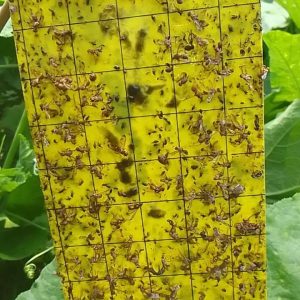
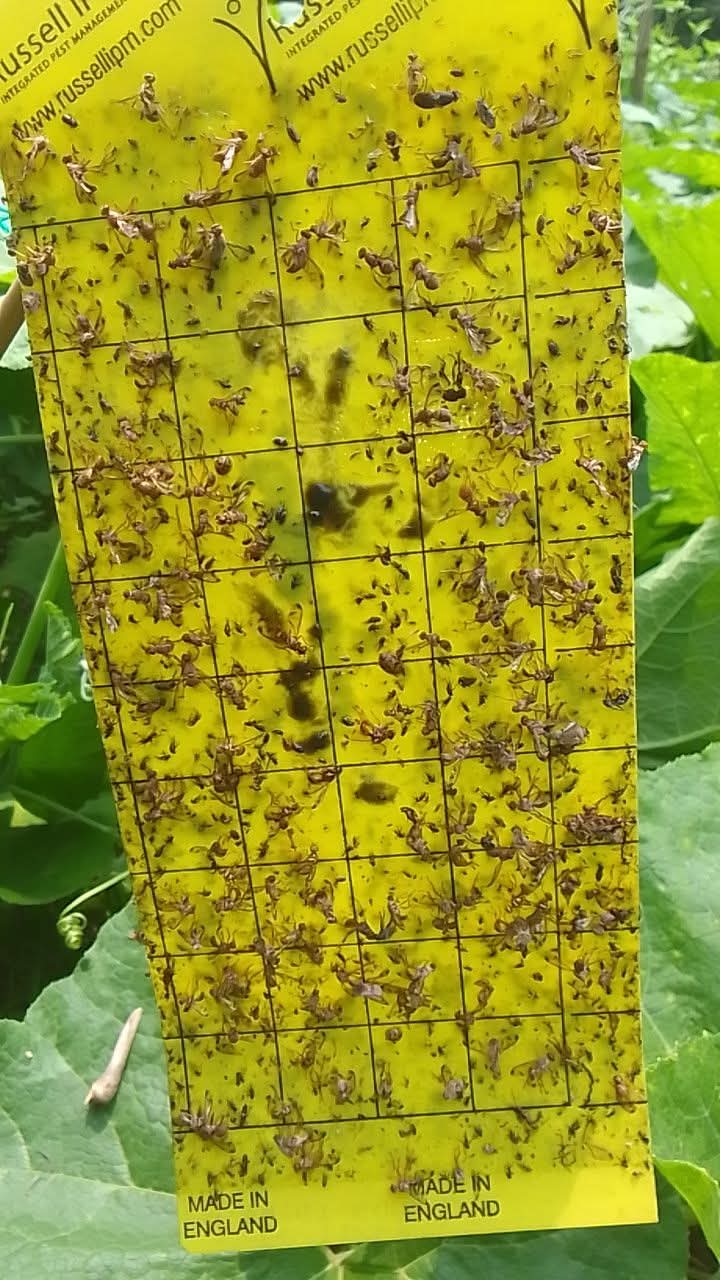
Russell IPM Yellow Sticky Trap
সর্বনিম্ন পাঁচটি একসাথে অর্ডার করতে পারবেন
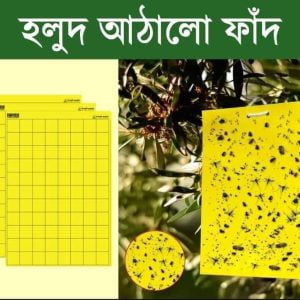
This Russell IPM Yellow Sticky Trap is doing exactly what it was designed to do: attract and trap flying insect pests using a scientifically optimized shade of yellow.
Looking closely at the image, you have a heavy infestation. Here is a breakdown of what you are dealing with and how to manage it:
1. Identifying the Pests
The vast majority of the insects caught here look like winged adults of small, soft-bodied plant pests. Given the background leaves (which appear to be cucurbits like squash, melon, or cucumber), these are highly likely:
Winged Aphids: Migrating adults looking to establish new colonies.
Thrips / Fungus Gnats / Shore Flies: Small, darker flies that thrive in humid foliage environments.
Whiteflies: Though usually white, their bodies appear darker once stuck in the wet glue matrix.
2. How to Use the Grid for Counting
Counting every single bug on a crowded card like this will give you a headache. The black grid lines are printed on the trap specifically to help you monitor population trends without counting the whole board:
The 30% Rule: Pick 3 to 5 random squares on the grid and count only the insects inside them.
Calculate the Total: Average your count per square, and multiply it by the total number of squares on the card to estimate the total population.
Track the Trend: Record this number weekly. If the estimate goes up significantly from last week, your pest population is booming, and it is time to intervene.
3. Immediate Action Steps
Because this trap is so densely covered, it is reaching its maximum capacity. When a trap is this full, new bugs will literally land on top of dead ones and escape.
Replace the Trap: It’s time to take this one down and hang a fresh card.
Adjust Position: Hang the new trap vertically, ideally keeping the bottom of the card about 10 cm (4 inches) above the top of the crop canopy. Move it upward as your plants grow.
Check Under the Leaves: Sticky traps only catch flying adults. Check the undersides of the leaves directly behind the trap for crawling nymphs, larvae, or eggs.
Consider Treatment: A population this high usually means you need to supplement the traps. Depending on your gardening style, look into releasing beneficial predatory insects (like lacewings) or spraying the undersides of the leaves with insecticidal soap or neem oil.