The global food system is standing at a critical crossroads. By 2050, the world’s population is expected to reach nearly 10 billion people. To feed everyone, global food production needs to increase by an estimated 60% to 70%.
At the same time, farmers are facing unprecedented challenges: unpredictable weather patterns, shrinking arable land, water scarcity, and rising input costs.
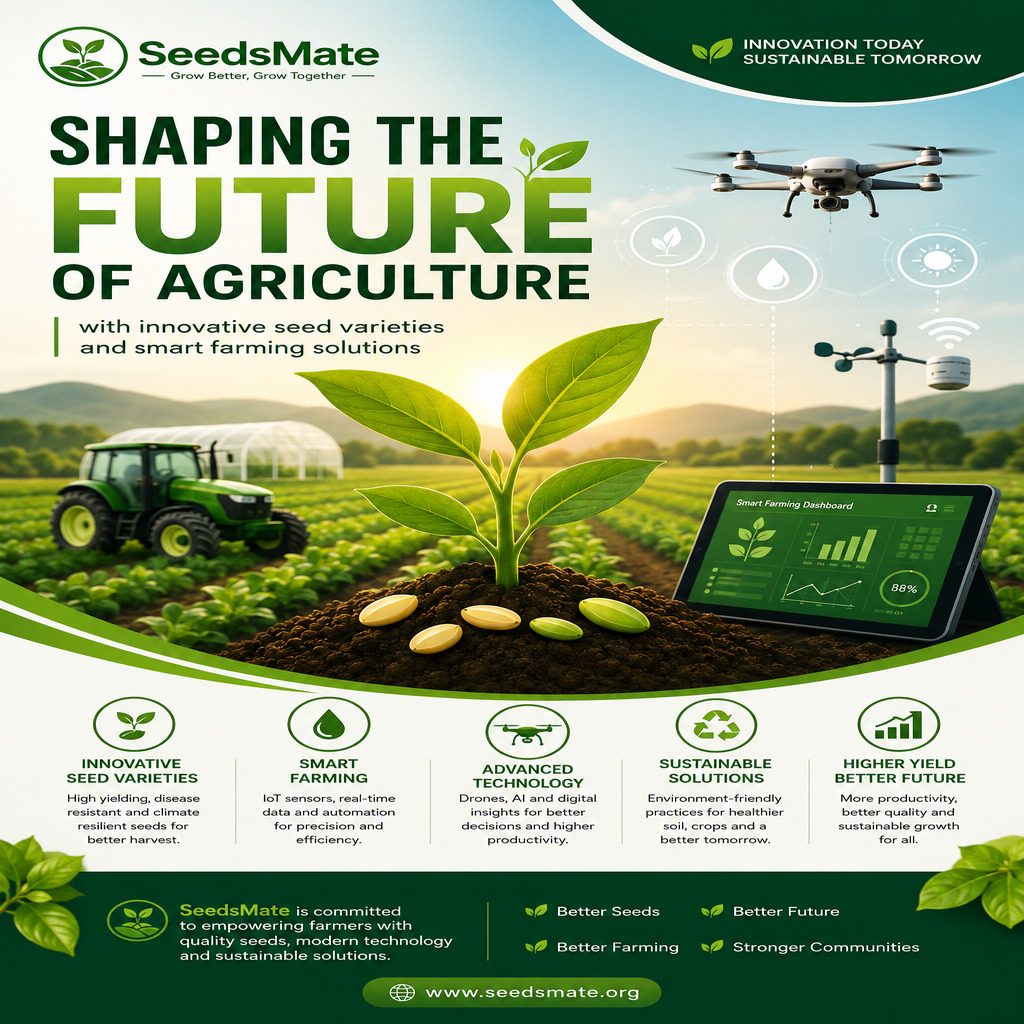
The solution to this complex puzzle isn’t simply farming more—it is farming smarter. Driven by a powerful combination of innovative seed varieties and smart farming technologies, the agricultural landscape is undergoing a massive digital and biological revolution. Here is an A-to-Z look at how these innovations are securing the future of our food supply.
Innovative Seed Varieties
Every successful harvest begins with a single seed. Traditional crop varieties are increasingly struggling to keep pace with changing environments. That is where NextGeneration seed engineering and selective breeding come into play.
-
- Climate-Resilient Crops: Scientists and breeders are developing seeds that can thrive in extreme conditions. This includes drought-tolerant corn, flood-resistant rice (which can survive underwater for weeks), and salt-tolerant grains that grow well in coastal areas with high soil salinity.
-
- Enhanced Pest and Disease Resistance: Biologically advanced seeds reduce the reliance on chemical pesticides. By naturally resisting common blights, fungi, and insects, these varieties protect yields while promoting a healthier ecosystem.
-
- Nutritional Biofortification: Beyond just growing more food, innovative varieties focus on growing better food. Crops like zinc-enriched wheat or vitamin A-rich sweet potatoes are actively addressing hidden hunger and malnutrition in developing regions.
Looking to upgrade your farm or garden? Embracing high-quality, high-yield seeds is the first step toward smart farming. Premium platforms like SeedsMate (www.seedsmate.org) specialize in providing top-tier, reliable seed varieties designed to optimize your yield and guarantee agricultural success.
The Technological Boost: Smart Farming Solutions
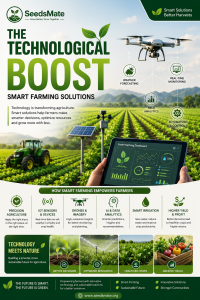
While innovative seeds provide the blueprint for resilient crops, Smart Farming (or precision agriculture) provides the ideal environment for those seeds to maximize their genetic potential.
IoT Sensors and Real-Time Monitoring
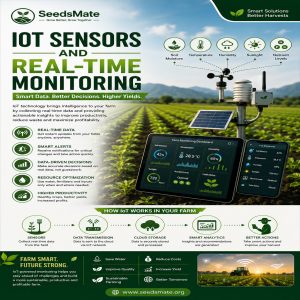
The guesswork is officially leaving the field. Internet of Things (IoT) sensors placed throughout the soil monitor moisture levels, nutrient content, and temperature in real time. This data is beamed directly to a farmer’s smartphone or tablet, letting them know exactly when to water or fertilize.
Drones and Aerial Imaging
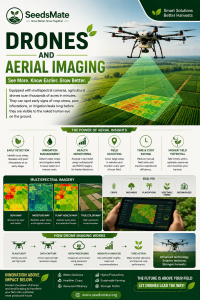
Equipped with multispectral cameras, agricultural drones scan thousands of acres in minutes. They can spot early signs of crop stress, pest infestations, or irrigation
Automation and Autonomous Machinery
Self-driving tractors and automated weeding robots are tackling labor shortages and reducing soil compaction. These machines use AI to distinguish between a weed and a crop, applying micro-doses of herbicide only where absolutely necessary, which slashes chemical usage by up to 90%.
Why Agriculture Needs Innovation
According to the United Nations, the world’s population is expected to approach 10 billion by 2050, requiring approximately 50–70% more food production depending on dietary trends and food waste reductions.
Meanwhile, agriculture faces significant challenges:
-
- Climate change
-
- Water scarcity
-
- Soil degradation
-
- Pest and disease evolution
-
- Labor shortages
-
- Rising production costs
-
- Market uncertainty
-
- Traditional farming methods alone cannot meet these growing demands.
Innovation has become essential not optional.
The Power of Innovative Seed Varieties
Seeds are the foundation of every successful harvest.
Modern seed breeding combines decades of scientific research with advanced breeding techniques to develop varieties that perform better under challenging conditions.
Key Benefits
Higher Yield Potential
Improved genetics enable plants to produce more fruits, vegetables, and grains from the same area of land.
Benefits include:
-
- Stronger plant vigor
-
- Uniform growth
-
- Better fruit setting
-
- Improved harvest quality
Disease Resistance
Modern varieties are bred to resist many common plant diseases, reducing crop losses and lowering dependency on chemical control.
Examples include resistance to:
-
- Wilt diseases
-
- Mosaic viruses
-
- Powdery mildew
-
- Bacterial infections
-
- Leaf spot diseases
This helps farmers produce healthier crops with fewer inputs.
Climate Resilience
Extreme weather has become increasingly common.
Innovative seed varieties are being developed for:
-
- Heat tolerance
-
- Drought tolerance
-
- Flood resistance
-
- Salinity tolerance
-
- Temperature fluctuations
Climate-resilient crops improve production stability even under adverse environmental conditions.
Improved Nutritional Value
Plant breeding now focuses not only on yield but also on nutrition.
Biofortified crops may contain increased levels of:
-
- Vitamin A
-
- Iron
-
- Zinc
-
- Protein
-
- Antioxidants
These improvements contribute to better public health and food security.
Better Shelf Life
Improved varieties often offer:
-
- Longer storage
-
- Better transport tolerance
-
- Reduced post-harvest losses
-
- Improved market value
Smart Farming: Agriculture Meets Technology
Smart farming integrates digital technologies into agricultural production.
Rather than relying on guesswork, farmers use real-time data to make better decisions.
The goal is simple:
Produce more while using fewer resources.
Precision Agriculture
Precision agriculture uses GPS, sensors, satellite imagery, and software to manage crops with remarkable accuracy.
Instead of treating an entire field the same way, farmers can apply inputs only where needed.
Benefits include:
Internet of Things (IoT)
IoT devices continuously monitor farm conditions.
Common sensors measure
-
- Soil moisture
-
- Soil temperature
-
- Air humidity
-
- Rainfall
-
- Light intensity
-
- Nutrient levels
Farmers receive instant updates on smartphones or computers.
Real-time information enables faster and smarter decisions.
Artificial Intelligence in Agriculture
Artificial Intelligence is becoming one of the most valuable tools for modern farming.
AI can:
-
- Detect plant diseases
-
- Predict pest outbreaks
-
- Estimate crop yields
-
- Recommend irrigation schedules
-
- Optimize fertilizer applications
-
- Analyze weather risks
Machine learning improves recommendations as more data become available.
Agricultural Drones
Drones have become essential tools in precision agriculture.
They provide:
-
- Crop monitoring
-
- Plant health assessment
-
- Pest detection
-
- Nutrient deficiency mapping
-
- Irrigation evaluation
-
- Field surveying
Some advanced drones also perform:
-
- Precision spraying
-
- Seed broadcasting
-
- Fertilizer application
This saves both time and labor.
Smart Irrigation Systems
Water is becoming one of agriculture’s most valuable resources.
Smart irrigation uses:
-
- Soil moisture sensors
-
- Weather forecasting
-
- Automated irrigation controllers
Benefits include:
-
- Water conservation
-
- Reduced energy costs
-
- Healthier plants
-
- Improved root development
Data,Driven Farming
Modern agriculture generates enormous amounts of data.
Farmers analyze:
-
- Weather trends
-
- Soil conditions
-
- Historical yields
-
- Market prices
-
- Crop performance
Better information leads to better farming decisions.
Greenhouse Technology
Controlled environment agriculture allows year-round production.
Modern greenhouses provide:
-
- Temperature control
-
- Humidity management
-
- CO₂ optimization
-
- Automated irrigation
-
- Integrated pest management
This results in:
-
- Higher productivity
-
- Premium quality
-
- Reduced pesticide use
Sustainable Agriculture
The future of agriculture is not just about producing more.
It is about producing responsibly.
Sustainable farming focuses on:
-
- Soil conservation
-
- Water efficiency
-
- Biodiversity
-
- Reduced chemical dependence
-
- Carbon footprint reduction
-
- Long-term productivity
Healthy ecosystems support healthy farms.
Regenerative Agriculture
Regenerative farming goes beyond sustainability by restoring soil health.
Practices include:
-
- Cover cropping
-
- Crop rotation
-
- Compost application
-
- Reduced tillage
-
- Organic matter improvement
Benefits include:
-
- Better soil structure
-
- Increased microbial activity
-
- Improved water retention
-
- Carbon sequestration
-
- Long-term resilience
Digital Farm Management
Farm management software allows farmers to monitor every aspect of production.
Digital platforms help track:
-
- Planting schedules
-
- Irrigation
-
- Fertilizer records
-
- Pest management
-
- Labor
-
- Equipment maintenance
-
- Financial performance
Everything is available from one dashboard.
Challenges Facing Modern Agriculture
Despite remarkable progress, agriculture still faces important challenges.
These include:
-
- High technology costs
-
- Limited farmer training
-
- Internet connectivity issues
-
- Climate uncertainty
-
- Market volatility
-
- Access to quality seeds
-
- Adoption barriers among smallholder farmers
Collaboration between governments, researchers, private companies, and farmers will be essential.
The Importance of Quality Seed
Even the most advanced farming technologies cannot compensate for poor-quality seeds.
High-quality seeds provide:
-
- Better germination
-
- Uniform emergence
-
- Strong root systems
-
- Improved disease tolerance
-
- Higher productivity
-
- Consistent crop quality
Investing in quality seeds is often the first step toward successful farming.
Future Technologies Changing Agriculture
The coming decade will introduce even more innovations.
Emerging technologies include:
-
- Autonomous tractors
-
- Agricultural robots
-
- AI-powered crop diagnostics
-
- Vertical farming
-
- Hydroponics
-
- Aeroponics
-
- Gene editing
-
- Blockchain-based food traceability
-
- Satellite-powered farm analytics
-
- Carbon farming systems
These technologies will help agriculture become more efficient, sustainable, and resilient.
Benefits for Farmers
Farmers adopting innovative technologies can expect:
-
- Higher crop yields
-
- Lower production costs
-
- Better resource efficiency
-
- Improved crop quality
-
- Reduced environmental impact
-
- Greater profitability
-
- Better risk management
-
- Increased resilience to climate change
Benefits for Consumers
Consumers also benefit from agricultural innovation through:
-
- Safer food
-
- Better nutritional quality
-
- More consistent supply
-
- Lower food waste
-
- Improved food security
-
- Environmentally responsible production
Building the Agriculture of Tomorrow
The future of agriculture depends on combining scientific innovation with sustainable farming practices.
Innovative seed varieties provide the genetic foundation for stronger crops, while smart farming technologies help farmers make informed decisions that maximize productivity and minimize environmental impact.
The farms of tomorrow will be increasingly connected, data-driven, and environmentally responsible. Farmers who invest in quality seeds, embrace digital technologies, and adopt climate-smart practices will be better positioned to meet the growing global demand for food while protecting the planet for future generations.
Agriculture has always been the backbone of civilization. Today, it stands at the forefront of technological innovation—shaping a future where productivity, sustainability, and resilience grow together.
Frequently Asked Questions (FAQs)
What is smart farming?
Smart farming uses digital technologies such as sensors, GPS, AI, drones, and IoT devices to improve farming efficiency and productivity.
Why are innovative seed varieties important?
They offer higher yields, better disease resistance, climate resilience, improved quality, and enhanced nutritional value.
How does AI help agriculture?
AI analyzes crop data, predicts diseases, optimizes irrigation, improves fertilizer management, and supports better decision making.
What is precision agriculture?
Precision agriculture uses technology and real time data to apply water, fertilizer, and crop protection products only where and when they are needed.
What is climate smart agriculture?
Climate smart agriculture increases productivity while improving resilience to climate change and reducing environmental impacts.
The future of farming belongs to those who choose quality from the start. With the right seeds and the right knowledge, every grower big or small can build a better harvest.
Start your journey with SeedsMate. Visit www.seedsmate.org and grow with confidence.